We use cookies to ensure you get the best possible experience on our website.
Welcome gift
10% discount on your first order
Create your account in seconds, and activate a special coupon for your account to renew the luxury of your home with the finest curtains and furnishings.
A coupon specific to your account, to be used once
Applies to cash payment
One step separates you from the opponent
Enter your phone number or email address to create your account or log in.
The difference between a bedspread and a comforter – The complete Bedspread vs Comforter guide
A bedspread or a comforter? This question comes up with every bride's trousseau and every bedroom makeover. This guide explains the difference in material, weight, use, and care, so you can choose what's best for your bed and the season.
Quick answer: In a bedspread vs. comforter comparison, a bedspread is a lighter, thinner covering that covers the entire bed to the floor and is used for aesthetics and light warmth. A comforter, on the other hand, is heavier, padded with more material, and designed for warmth in winter, usually covering only the surface of the bed. Bedspreads are for summer and decoration, while comforters are for cold weather.
Article Contents
What is a bedspread? Definition of a bedspread
A bedspread, or blanket, is a lightweight to medium-weight bed covering, usually made of an outer layer of fabric with a thin lining or very light filling. Its main characteristic is its large size, covering the entire bed from the top and sides, sometimes even reaching the floor and concealing the bed frame. It can also be folded over pillows.
A bedspread combines two functions: it's a decorative element that gives the bed a neat and elegant look throughout the day, and it provides light warmth suitable for summer, spring, and air-conditioned rooms. In Egyptian homes, the word “kafarta” or “kouferta” is often used to refer to any padded bed cover, but the precise meaning is this large, lightweight blanket.
the weight: Light to medium.
Size: Large, covering the sides and sometimes the ground.
Job: Light decor and warmth.
season: Summer, spring, and all year round in air-conditioned rooms.
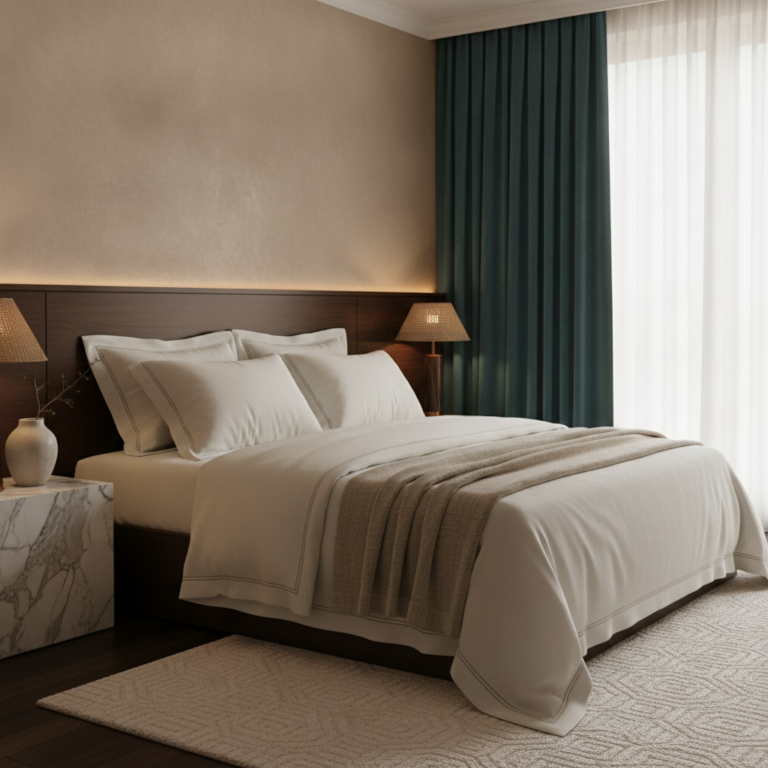
The bedspread covers the entire bed and gives it a tidy look.
What is a comforter? Definition of a comforter
A comforter is a thick, padded cover made primarily of fiber, cotton, or feathers, designed for warmth. It's typically sewn in squares or stripes to ensure even distribution of the filling, and its size usually covers the bed surface with a slight overhang on the sides, without reaching the floor.
The duvet is essential for cold winter nights, and it can be used alone or inside a cotton cover (duvet cover) that is easy to wash. Its weight varies depending on the amount of filling: there are light duvets for autumn, and heavier duvets for colder days.
the weight: Medium to heavy.
Size: It covers the surface of the bed with a slight slope.
Job: Warmth is the main thing.
season: Autumn and winter.
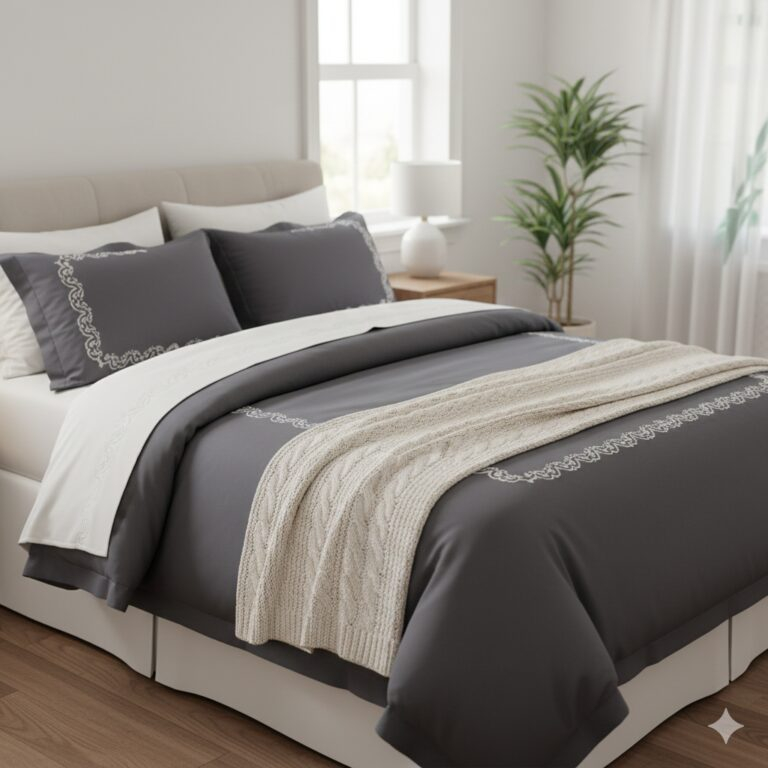
A quilt with its thick filling is your companion in winter.
Bedspread vs Comforter: The difference in 7 points
Thickness and filling: The bedspread is thin with light padding, and the duvet is thick with a large filling.
Warmth: The blanket is lightly warm, and the quilt is very warm.
Size: The bedspread is larger and reaches the floor, while the quilt usually covers the surface of the bed.
Job: A bedspread is decorative and provides light warmth, while a quilt is primarily for warmth.
season: The blanket is for summer and all year round, and the quilt is for winter.
Washing: A bedspread is easier to wash because it is lighter, while a duvet requires a large washing machine, dry cleaning, or a washable cover.
Shape: A bedspread gives a flat and neat look, while a quilt gives a fluffy and warm look.
Understanding this difference is the first step in choosing what's right for your room. If you want a more comprehensive guide to types and materials, read on. The best types of bedspreads 2026.
Types of bedspreads and quilts
Types of bedspreads
Lightweight cotton blanket: For summer, it's breathable and easy to wash.
Quilted blanket: Prominent stitching with a pattern, elegant design and light warmth.
Jacquard blanket: Luxurious woven patterns, ideal for bridal suites.
The blanket is double-sided: Two colors in one piece.
Embroidered bedspread: A distinctive handmade touch for special occasions.
Types of quilts
Hollow fiber quilt: Most popular, lightweight, warm, and easy to wash.
Microfiber duvet: Smooth and economical.
Cotton quilt: It's normal and he's breathing, but he's heavier.
Wool quilt: Very warm for cold days.
Feather quilt: Lighter, warmer, and more luxurious, but it is also more expensive.
When to choose a bedspread and when to choose a quilt
Choose the blanket if: Do you want the bed to look neat all day, or is it hot, or is the room air-conditioned, or do you like to change the room's decor easily, or does the bed base not look nice and you want to hide it?
Choose the duvet if: The weather is cold, or the house gets cold in winter, or you feel cold quickly, or you want the fluffy hotel sleeping feeling, or you prefer to change the cotton blanket instead of washing the whole blanket.
The ideal solution: Both together. The duvet is for sleeping in winter, and the blanket is placed on top of it during the day for style, or used alone in summer. This is what most homes and hotels do.
The blanket over the duvet combines style and warmth.
Bedspread vs Comforter Comparison Table
Standard
Bedspread
Comforter
Fish
High
thick
warmth
Light
high
Size
The sides cover the ground
The bed surface covers
season
Summer and year-round
Autumn and winter
washing
Easiest
harder or more difficult
shape
Flat and tidy
Fluffy and warm
Care and washing
The blanket: Most of them can be machine washed on a gentle cycle with lukewarm water and hung to dry in the shade. Jacquard and embroidered fabrics are best cleaned dry. The quilt: Use a cotton cover that you wash every two weeks, and wash the duvet itself once or twice a year in a large washing machine or laundry, and hang it out to dry completely so the filling doesn't clump. See Furniture care For details.
Proper care prolongs the life of the blanket and quilt.
FAَQ
What is the difference between a quilt and a duvet?
A duvet is a stuffed comforter without a decorative outer cover, and it's always placed inside a cotton cover that's washed separately. A comforter, on the other hand, usually has an outer cover that's part of it and is used directly. Duvets are easier to clean and change.
Which is warmer: a blanket or a comforter?
A duvet is much warmer because its filling is thicker and traps more warm air. A comforter is lighter and more suitable for milder climates or as a layer over a duvet.
What is the most suitable blanket size for a 160 cm bed?
Choose a bedspread that is about 240 to 260 cm wide so that it falls on both sides, and about 250 cm long or more if you want it to cover the pillows.
Is the duvet suitable for allergy sufferers?
Yes, if its filling is hypoallergenic synthetic like hollow fibers, and it has a cotton cover that is washed regularly. Avoid feathers and wool if you have allergies.
Is a blanket the same as a quilt?
It is similar to it. The quilt is a padded cover with decorative stitching and a thin layer of filling, and in comparing bedspreads vs quilts, the difference is that bedspreads are often larger and reach the floor, while quilts are smaller and slightly heavier.
Is it okay to sleep under a blanket only in winter?
If the house is warm or has heating, it's possible, but you will most likely need a quilt or blanket underneath it.
Should I buy both in the bride's trousseau?
Yes, one or two blankets for summer, and a quilt for winter for each bed.
Bedspread vs Comforter vs Quilt: All three together
A third word often appears in this comparison, and that is the quilt. To complete the picture: Bedspread The largest and usually the lightest, it covers the bed all the way to the floor. The Quilt A medium-thickness cover, two layers of fabric with a thin filling sewn with a decorative pattern in between, and its size covers the surface of the bed with a slight overhang. Comforter The thickest and warmest, with a full filling and a fluffy appearance. In the Egyptian market, quilts are often sold under the name “padded blanket,” which is the source of much confusion. So when you buy, ask about the thickness, size, and type of filling instead of relying solely on the name.
The difference between a bedspread and a quilt in terms of shape and decoration
A bedspread gives the bed a flat, clean, and tidy look, highlighting the fabric's patterns and stitching. It's ideal for those who like their bed to stand out as a decorative piece throughout the day. Because it trails on the floor, it conceals the bed frame and the space underneath, creating a sense of order in small rooms. A duvet, on the other hand, provides a fluffy, soft, and warm look, reminiscent of hotel beds, making the bed feel comfortable and inviting. Since it's slightly smaller, the bed frame is more visible, so if the frame is beautiful or upholstered, the duvet will accentuate it.
In modern decor, many combine the two: a fluffy white duvet with a cotton coverlet, and a runner or throw draped over the foot of the bed in a distinctive color. This combination brings together warmth, luxury, and vibrancy all at once.
Types of bedspreads according to material
Cotton: The most common type is breathable, easy to wash, comfortable for the skin, and suitable for summer. Cotton blended with polyester: Less frizz, cheaper, and suitable for everyday use. Satin and rayon: Luxurious shine and festive appearance, suitable for bridal suites. Jacquard: Rich woven patterns that last for years without fading. Velvet: Soft texture and extra warmth, suitable for winter and classic style. Linen: Natural, refreshing, and elegantly understated. Each fabric requires different care instructions, so read the label before washing.
Types of duvets by weight
Duvets are categorized according to the amount of filling: light Suitable for autumn, spring, and air-conditioned rooms. Intermediate Suitable for most winter days in Cairo, andHeavy Suitable for colder regions and older homes that get cold. Choose the weight according to your body type: if you get hot quickly, go for a lighter one; if you get cold, go for a heavier one. A flexible solution is a medium-weight duvet with a light blanket for colder days.
Bedspread vs Comforter in a Bride's Trousseau
For a bride's trousseau, it's best to have two items for the marital bed: a luxurious bedspread or two for style and summer, and at least one duvet for winter, preferably with a cotton cover for easy changing and washing. Choose bedspread colors that coordinate with the room's curtains and wardrobe, and a white or neutral-colored duvet to match any bedspread. For children's and guest rooms, a practical duvet for each bed along with a simple bedspread is recommended. You can find the rest of the trousseau in [link/context missing]. How many sets of bedsheets does a bride need? andBridal trousseau curtains.
Correct bed layers
Mattress protector: It protects the mattress from stains and sweat.
A sheet with elastic: Tight on the mattress.
Regular sheet (optional): For the classic hotel style.
The quilt is in its cover: In winter or cold rooms.
The blanket: On top of all that, during the day for the sake of appearance, or alone in the summer.
Pillows: The sleeping pillows are in the back, and the decor is in the front.
Runner or blanket: Folded over the edge of the bed as a finishing touch.
These layers allow you to easily control the warmth according to the weather: remove a layer when the weather gets warm, and add a layer when it gets cold, without changing the whole bed.
How to choose the right size
To ensure the bedspread fits properly, measure the width, length, and height of your mattress along with the bed frame. A bedspread that reaches the floor should be approximately twice the width of the mattress plus twice the bed's height from the floor. A comforter, on the other hand, should be the width of the mattress plus about 50-60 cm to allow for some overhang on the sides. If your mattress is very thick, increase the size. A bedspread that's too small will look unflattering, even if it's made of high-quality material, and a comforter that's too small will make you feel cold because it tends to drape over the sides.
Common mistakes in selection
Buying a heavy blanket as a quilt will make you cold in winter.
Buy a blanket for the summer, and you wake up hot.
Ignore the size, the blanket will appear short on the sides.
Washing the quilt in a small washing machine causes the filling to clump and the washing machine to become tired.
Storing the quilt in a sealed plastic bag will cause an odor.
Choosing colors that don't match between the bedspread and the curtain.
Bedspread vs Comforter according to the Egyptian climate
Egypt's climate makes comparing bedspreads and comforters different from comparing them to Europe, for example. Summers here are long and hot, from May to October, and during this time a light cotton bedspread is the best choice, sometimes even a light sheet is sufficient. Winters are short and mild in Cairo and the Delta, but they get cold at night, especially in January and February, making a medium-weight comforter essential. In Upper Egypt and desert regions, the difference between daytime and nighttime temperatures is significant, so layering is crucial. In Alexandria and along the coast, humidity is high, so breathable and quick-drying materials are best. Therefore, the difference between bedspreads and comforters in Egypt isn't a matter of “either/or,” but rather a question of “when to use each.”.
The difference in price between a bedspread and a quilt
A simple cotton comforter is often more economical than a duvet because it has less filling. However, luxurious comforters like jacquard and embroidered ones can be more expensive than an average duvet due to the complexity of the weave and embroidery. The price of a duvet increases with the type of filling: hollow fiber and microfiber are the most common, while wool and down are the most expensive. More important than price is lifespan: a good comforter and duvet will last for years, so their long-term cost is less than buying cheap ones that need replacing every year.
Types of bedspreads suitable for each room
The marital bedroom: A luxurious jacquard or quilted blanket in a color that matches the curtain, along with a white winter duvet.
Children's room: Lightweight cotton coverlet, easy to wash, and hypoallergenic duvet.
Guest room: A neutral bedspread that goes with any decor, and a medium-sized duvet.
Teenagers' room: A double-sided coverlet for easy shape changes.
Chalet and summer resort: Lightweight cotton bedspreads only, in refreshing nautical colors.
Bedspread vs Comforter: Petalize Expert Opinion
From our experience with many clients, most Egyptian households benefit most from combining two things: a white comforter with medium filling in a washable cotton cover, and a decorative throw in a distinctive color on top during the day. This combination solves the problem of both winter and summer simultaneously, makes cleaning easier, and gives you the flexibility to change the room's look each season simply by changing the throw. If your budget is limited, start with a medium-thick padded throw that can serve as a cover for most of the year, and add the comforter later.
Storing blankets and quilts between seasons
When summer arrives and you remove your comforter, or winter arrives and you remove your light blanket, proper storage makes a difference in their lifespan. Wash or clean the item first, and make sure it's completely dry, as any remaining moisture can cause odors and stains. Fold the comforter gently without pressing too hard so the filling doesn't lose its fluffiness, and place it in a cotton bag or a breathable fabric box. For jacquard or embroidered blankets, fold them with silk paper between the folds to prevent the patterns from breaking. Store everything in a dry place away from sunlight, along with natural scented sachets. When you take them out, hang them to air out for a few hours before using them.
How to tell the quality in the store
Touch the outer cover: Soft, firm cotton is better than shiny polyester.
Press down on the quilt: A good filling returns to its shape quickly.
Look at the sewing: The squares or lines are regular and neat.
Shake the piece: The filling must remain distributed without accumulating at the edges.
Read the label: The type of filling, its weight, the percentage of cotton, and washing instructions.
Smell the fabric: A strong chemical smell is a sign of cheap treatments.
Bedspread vs Comforter Summary
The difference between a bedspread and a duvet is clear once you understand their purpose: a bedspread is for style and light warmth, covering the bed to the floor, while a duvet provides real warmth in winter with its thick filling. In Egypt's climate, it's best to have both and use them according to the season, or layer them together during the day and night. Choose the right size, breathable fabric, filling that suits your needs, and colors that coordinate with your room. You can see the different types of bedspreads available at [website/store name]. Petaliz CollectionOr approximate Egyptian cotton bed sheet guide To complete your bed set.
Practical scenarios: Which would you choose?
Apartment in Cairo with air conditioning in every room: A medium-sized padded cotton blanket for about the whole year, and a light quilt for two months in winter. An old house with thick walls that gets cold in winter: A medium-sized duvet for heavy use from November to March, and a light blanket for the rest of the year. Chalet on the coast: Lightweight cotton blankets only, and a spare blanket for those rare cold days. New bridal apartment: A luxurious jacquard throw, a white duvet in a cotton cover, and a summer throw in a refreshing color. A toddler's room: A lightweight hypoallergenic duvet in a cover that is washed weekly, and a fun-colored cotton comforter. Infrequently used guest room: A medium-sized padded blanket in a neutral color that is sufficient for most seasons.
These scenarios illustrate that comparing bedspreads and comforters depends on your home's conditions and usage, not on a fixed rule. Consider the actual temperature of your home, the number of cold months, and who will be using the bed, then decide.
The difference between a bedspread and a quilt in washing, explained in detail.
Cotton comforters and lightly padded ones are usually washed in a home washing machine on a gentle cycle with lukewarm water and air dry quickly. Duvets, on the other hand, are more difficult to wash at home due to their size and filling. It's best to wash them at a laundromat or a large-capacity washing machine, or use a cotton cover that washes regularly and wash the comforter itself only once a year. When washing a comforter, use a small amount of detergent and extra rinsing time to prevent soap from remaining in the filling. Dry it very well, turning and shaking it every few hours, as any moisture inside the filling can cause odor and clumping. This is one of the most important practical differences to keep in mind when choosing between different types of comforters and duvets.
Coordinating the bedspread and quilt with the room's decor
To create a cohesive bedroom look, choose a duvet in a calm, neutral color like white, ivory, or light gray, as it will remain the same color throughout most of the winter. Let the throw pillow add character and color. Coordinate the throw pillow color with the curtains, wardrobe, or rug, and choose decorative pillows that echo these colors. In the summer, when you remove the duvet, the throw pillow alone completes the look. This way, you can change the feel of the room each season simply by changing the throw and pillows, without changing anything else. You can refer to the coordination guidelines in Coordinating curtain colors with furnitureChoose a suitable curtain from bedroom curtains To complete the picture.
If you are unsure of the choice, the Petalize team can help you determine the right size, material, filling, and color for your bed and room, whether you are furnishing a new apartment or renovating an old room.
Finally, remember that the right choice doesn't have to be expensive, but it does have to be suitable. A good cotton bedspread and a duvet with the right filling, in the right sizes and calming colors, are more than enough to ensure you sleep comfortably all year round and wake up every day to a tidy and elegant bed that brings you joy. Start with the basics and gradually add more according to your actual needs each season.
If you have any questions about the difference between a bedspread and a duvet, or about the right size for your bed, send us a picture of your bed and its size on WhatsApp, and we will recommend the perfect combination for the season and your taste with ease.
Our team responds quickly and helps you choose with confidence, whether you need a summer blanket, a winter duvet, or both together for a complete and comfortable bedroom all year round.
Confused between a bedspread and a quilt?
Contact us and we'll help you choose what's best for your bed and your season. Browse Bedspreads.














 English